You notice it in ordinary moments. Getting dressed. Catching your reflection in the bathroom mirror. Looking at photos after a hard-earned weight loss journey, after pregnancy, or after the passage of time. The shape of your body may be healthier, stronger, or leaner, but your skin doesn't seem to have gotten the memo.
That disconnect can feel discouraging.
A lot of people try to solve it the same way at first. They buy a “firming” cream, use it faithfully, and wait for a visible lift that never really comes. Then comes the frustration, because the promise sounded simple and the situation is more complex. Skin firmness is tied to structure, hydration, muscle, nutrition, and long-term collagen support. It's rarely changed by one product alone.
The good news is that natural strategies can help. They just work differently than marketing suggests. If you want to learn how to tighten skin naturally, the most realistic path is to improve the biology underneath the surface. Better muscle support. Better nutrient status. Better protection against collagen breakdown. Better consistency over time.
The Frustrating Reality of Sagging Skin
Sagging skin bothers people for more than cosmetic reasons. It can change how confident you feel in your own body. It can make successful weight loss feel strangely incomplete. It can leave you wondering why you did “everything right” and still don't look or feel the way you expected.
I hear a version of this often in practice. Someone has cleaned up their eating, started moving more, maybe lost a meaningful amount of weight, and then says, “I'm healthier, but my skin looks older or looser than I thought it would.” That reaction is understandable. Skin doesn't always rebound as quickly as the rest of your body changes.
Why quick fixes disappoint
The biggest problem is expectation. Most over-the-counter messaging implies that skin can be lifted from the outside with the right serum, massage tool, or trendy ingredient. In real life, skin firmness depends on the quality of the tissue itself and the support beneath it.
That's why people often spend money and effort but still feel stuck.
Clinical reality: Natural skin tightening is usually a process of improving support and slowing further decline, not forcing a dramatic instant lift.
A more useful way to think about it
Skin is part of a larger system. Its appearance reflects what's happening with muscle mass, weight stability, sun exposure, hydration, stress load, and nutrition. If those foundations are weak, the surface tends to show it. If those foundations improve, the skin often looks better even when the change is gradual.
That whole-body perspective matters for people in Shawnee, Lenexa, Overland Park, Olathe, De Soto, and across the Kansas City area who are trying to make lasting health changes, not just chase another temporary beauty hack.
Here's the encouraging part. You may not be able to control every factor, but you can influence many of them. And when you do, the goal shifts from “How do I magically tighten this?” to “How do I build the strongest possible support for healthier-looking skin?”
Understanding Why Skin Loses Its Firmness
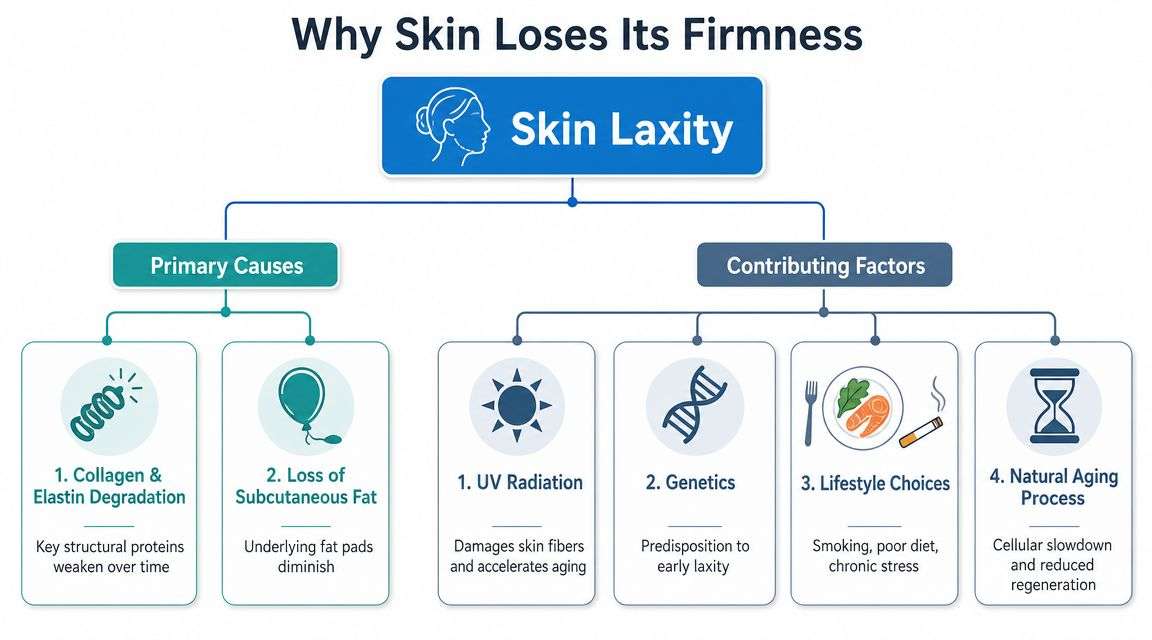
A patient loses weight, feels better in her body, then notices new looseness around the jawline, upper arms, or abdomen. That disconnect is frustrating, but it makes biological sense. Skin firmness depends on more than the skin itself. It reflects the condition of collagen and elastin, the health of the tissue underneath, and how well the body is repairing and rebuilding over time.
The main drivers behind laxity
Collagen gives skin tensile strength. Elastin helps it recoil after it stretches. With age, repeated sun exposure, smoking, blood sugar instability, poor sleep, chronic stress, and inadequate nutrition, those fibers become less organized and less resilient. The result is skin that can look thinner, crepey, or less supported.
Sun exposure is one of the clearest contributors because ultraviolet light accelerates collagen breakdown. Daily sunscreen helps reduce ongoing damage, especially in areas that get repeated exposure such as the face, neck, chest, and hands.
Weight change matters too, but the story is more nuanced than many articles make it sound. Skin can adapt better when weight loss is steady and lean mass is preserved. Rapid loss of body fat, especially without resistance training or enough protein, often leaves less structural support underneath the skin. In clinic, this is one of the most overlooked reasons people feel “deflated” after otherwise positive health changes.
Muscle is part of the scaffolding.
If someone loses muscle during dieting, the skin has less of a foundation to rest on. If inflammation is high, recovery is poor, or nutrient intake is inconsistent, the body also has fewer resources to maintain connective tissue well. That is why an integrative view matters here. Sagging skin is often a visible clue that the support system under the surface needs attention.
Why the root-cause view matters
Surface products have a role, but they do not replace biology. A cream can improve hydration in the outer layer of skin. It cannot restore significant muscle loss, correct under-eating, or reverse years of collagen breakdown on its own.
A practical outside perspective can sometimes help people sort through the noise. For a consumer-friendly roundup of common options, BotoxBarb on how to tighten skin gives a broad overview of approaches people often consider.
At a more individualized level, persistent skin laxity can be a clue to look beyond skincare. If loose skin is showing up alongside fatigue, slow recovery, stubborn weight changes, or signs of metabolic strain, targeted functional medicine lab testing can help identify barriers that affect tissue repair and body composition.
Skin firmness reflects collagen quality, muscle support, metabolic health, and recovery capacity.
What this means for natural treatment
Natural methods can improve the quality and support of skin. They do not remove large amounts of excess skin, and they do not produce the same lift as a procedure. The goal is better structure, better resilience, and less ongoing decline.
That shift in expectations matters. Once people understand that firmer-looking skin is built from connective tissue, muscle, nutrient status, and daily habits, the advice stops sounding like random beauty tips and starts sounding like body maintenance.
Nourishing Your Skin from the Inside Out
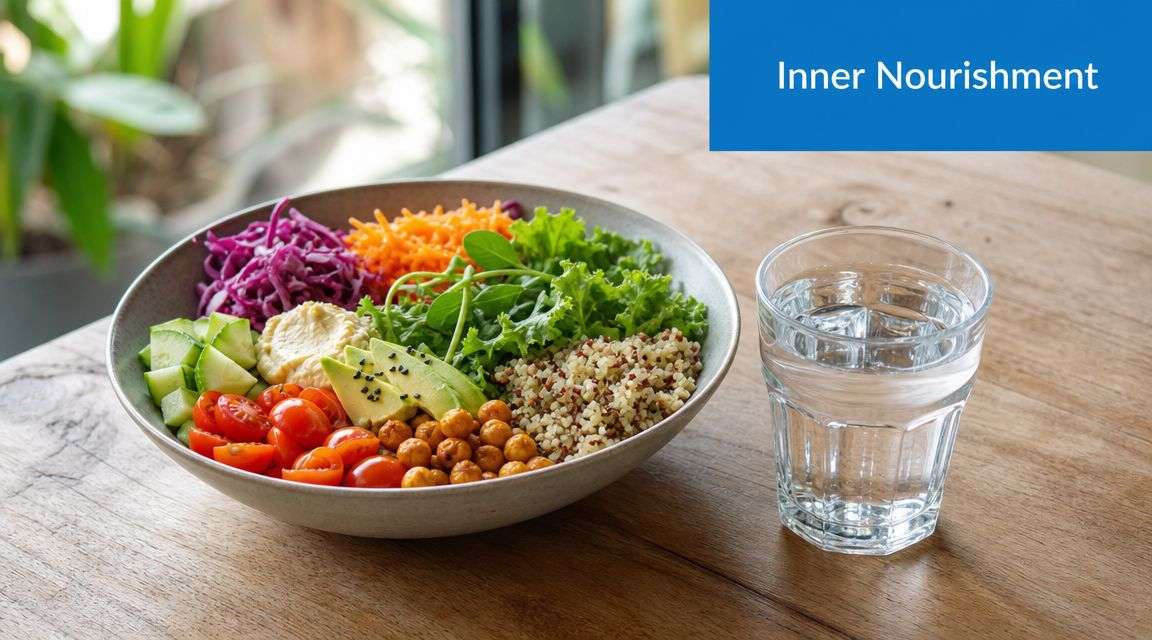
A common pattern in clinic is this: someone invests in creams, masks, and devices, but meals are inconsistent, protein is low, and hydration swings from one day to the next. Skin has a hard time staying firm under those conditions because the body lacks steady input for repair. Firmer-looking skin depends on the quality of the tissue underneath it, and that tissue is built from amino acids, micronutrients, fluids, and enough total energy.
Protein is structural, not optional
Protein gives the body the raw materials to maintain collagen, repair connective tissue, and preserve lean mass. If intake is too low, especially during weight loss, the body has less support for both muscle retention and tissue repair. That combination often shows up as a softer, less supported look.
Useful protein options include:
- Eggs and Greek yogurt for simple daily intake
- Fish, chicken, turkey, and lean beef for concentrated protein
- Beans, lentils, tofu, and tempeh for plant-based support
- Bone broth and collagen-containing foods if they fit your routine
Vitamin C matters here too because the body uses it in collagen synthesis. Citrus, berries, kiwi, bell peppers, and broccoli pair well with protein for that reason.
Food quality also shapes the repair environment. Meals built around protein, produce, and minimally processed fats usually support steadier recovery than a pattern dominated by ultra-processed foods and frequent blood sugar swings.
Hydration helps the surface. Nutrition supports the scaffold.
Hydration affects how skin looks and feels day to day. Well-hydrated skin often looks less dull and less crepey than dehydrated skin, even though water alone will not tighten loose skin or replace lost structure. A practical target is regular fluid intake across the day, with enough water and unsweetened fluids that urine stays pale yellow.
Inflammation and recovery matter as well. If you are trying to improve tissue resilience through diet, this guide to foods that support joint pain relief and lower inflammatory load is a useful starting point. The same eating pattern that helps joints often supports skin barrier function and connective tissue health.
A practical supplement role
Supplements can help, but they work best as an add-on to a solid diet, not a substitute for one. In practice, collagen peptides are reasonable for people who already eat well and want another layer of support. Results, if they happen, tend to be gradual and modest.
Practical rule: If your daily habits do not support repair, no supplement will rescue the result.
A simple skin-supportive plate often looks like this:
| Meal element | Why it helps |
|---|---|
| Protein source | Supports muscle maintenance and provides collagen building blocks |
| Colorful produce | Provides antioxidants and vitamin C |
| Healthy fats | Supports skin barrier function |
| Water or unsweetened fluids | Helps skin look less dry and depleted |
Nutrition is rarely the flashy answer people hope for. It is still part of the foundation. Skin tends to look firmer when the body has enough protein, enough micronutrients, and enough consistency to maintain the scaffolding underneath.
Building a Firm Foundation with Strength Training
If there's one natural strategy people underestimate, it's strength training. When skin looks loose after weight loss or with aging, part of what you're seeing is often reduced support underneath. Building lean muscle can improve the appearance of firmness because it creates a stronger base beneath the skin.

Why muscle changes the look of skin
This is one reason the conversation around how to tighten skin naturally should never stay limited to skincare. The American Academy of Dermatology notes that creams and lotions can't penetrate far enough to lift sagging skin, and it also points out that strength training can build muscle under the skin so it appears firmer. That same dermatology guidance notes that visible improvements in hydration, elasticity, roughness, and density have been reported after six months of daily collagen supplementation in study summaries it cites, which reinforces that this is a long-term process, not a weekend fix, in the AAD overview on firming sagging skin.
That combination matters. Muscle supports shape. Time supports tissue change.
What type of training helps most
You do not need bodybuilding-style workouts. You need consistent resistance work that challenges major muscle groups. Full-body routines tend to beat endless “problem area” exercises because the body responds to overall strength and lean mass development.
Useful foundational exercises include:
- Squats or sit-to-stands to build legs and glutes
- Deadlift patterns or hip hinges to strengthen the posterior chain
- Push-ups or chest presses for upper body support
- Rows for posture and back strength
- Loaded carries for trunk stability and total-body conditioning
Spot reduction isn't real, and spot tightening mostly isn't either. If someone only does triceps kickbacks hoping to “tighten arm skin,” they usually end up disappointed. A better strategy is to build the entire frame.
Start where your body can tolerate
A lot of adults in the Kansas City area want to train but also have back pain, knee pain, arthritis, old injuries, or a history of disc issues. That's where professional guidance can make the difference between a plan you abandon and one you can keep doing.
For people who need a structured entry point, LifeWorks Integrative Health offers DPT-guided rehab and movement-based care that can help patients rebuild strength safely while addressing bigger barriers like pain, poor mechanics, or deconditioning.
Don't ask, “What exercise is perfect for skin?” Ask, “What strength plan can I perform consistently for months?”
That question leads to better results.
Supportive Skincare and At-Home Rituals
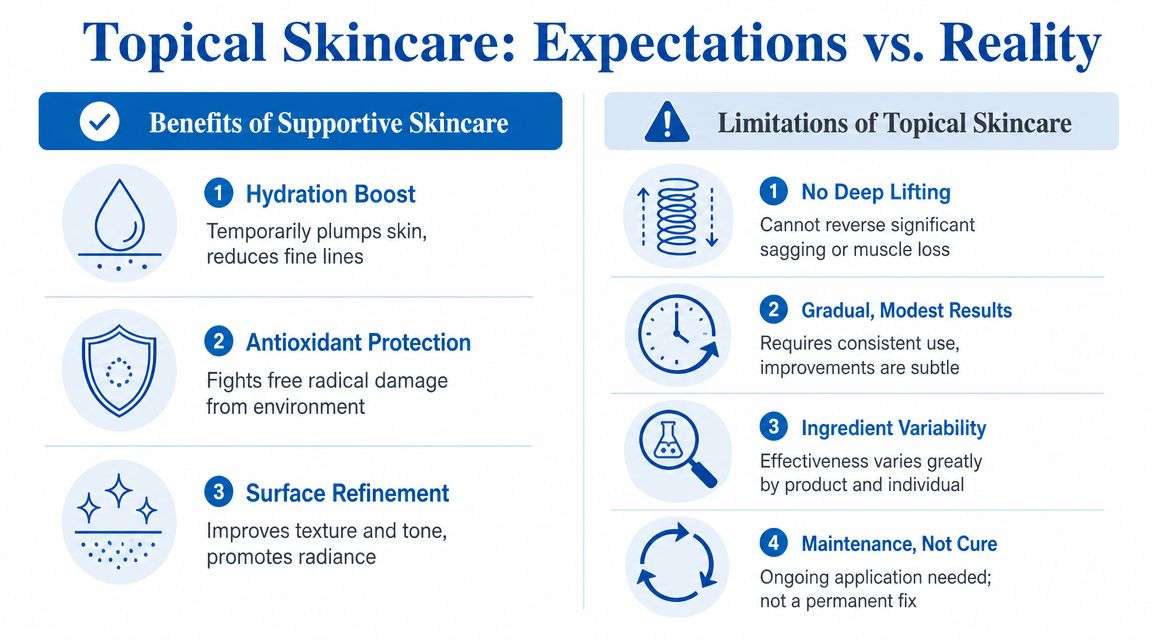
Topical care has a role. It's just a smaller role than commonly expected. Good skincare can improve hydration, surface texture, and overall appearance. It can't create a true deep lift when the underlying issue is major laxity, muscle loss, or a large amount of excess skin.
What topicals can realistically do
The most evidence-supported at-home skincare ingredient in this conversation is the retinoid. For looser-looking skin after weight loss, one of the more consistently supported home protocols includes a stable calorie deficit, adequate protein and hydration, strength training, and retinoid-containing topicals for gradual texture improvement. At the same time, expert summaries note that severe laxity often responds incompletely to at-home methods alone, as described in Healthline's medical review of how to tighten loose skin.
That's the right mindset. Retinoids can support better texture and turnover over time. They are not a substitute for rebuilding support or for professional procedures when laxity is advanced.
If your skin is sensitive, some people tolerate bakuchiol better than stronger retinoid products, though its effects are generally discussed more as supportive than significantly altering.
Useful rituals and common mistakes
Supportive practices can still help if expectations stay grounded.
- Moisturizing consistently can improve the look of dryness and fine crepiness.
- Massage, gua sha, or dry brushing may temporarily improve circulation and help skin look a bit more refreshed.
- Daily sunscreen helps protect the collagen you still have.
- Harsh over-exfoliation often backfires by irritating the skin barrier.
A simple routine often works better than a crowded one. Cleanser, moisturizer, sunscreen in the morning. Cleanser, retinoid if tolerated, moisturizer at night. That's enough for many people.
What usually wastes money
The biggest money traps are products that promise lifting, sculpting, or dramatic tightening from the surface alone. Those claims are usually strongest where the actual results are weakest.
A practical way to judge a product is to ask, “Does this help with hydration, texture, or protection?” If yes, it may be useful. If the claim is “tightens everything naturally in days,” skepticism is healthy.
When Natural Methods Arent Enough
Natural methods can absolutely improve skin quality. They can make skin look healthier, less dry, better supported, and in some cases somewhat firmer. But there's a point where healthy habits stop being enough to create the change someone wants.
That's especially true when there is severe laxity, a large amount of stretched skin after major weight loss, or facial sagging that reflects deeper structural changes.
The signs you may need more than home care
A professional conversation makes sense when:
- Skin folds remain significant despite stable weight and muscle-building efforts
- Texture improves but looseness doesn't
- You feel physically uncomfortable from rubbing, bunching, or friction
- The issue is highly localized and doesn't respond to broad lifestyle improvements
At that stage, the next tier usually includes nonsurgical options designed to stimulate deeper collagen activity, such as ultrasound, radiofrequency, or laser-based treatments. In some settings, regenerative approaches may also be considered as part of a broader tissue-health plan.
For readers who want a visual example of how aesthetic clinics describe focused lower-face options, Leamington Spa's 3D chin sculpting options show the kind of targeted approach people often explore when natural strategies aren't enough for a specific area.
Where integrative care fits
This is also where a broader health lens can be useful. If someone has persistent inflammation, poor recovery, weight cycling, chronic pain, or difficulty exercising, those barriers can keep undermining skin-supportive habits. In those cases, treatment may need to address more than the skin itself.
For patients exploring tissue-focused options within a broader non-surgical plan, regenerative medicine services may be one avenue to discuss with a qualified clinician.
The key message is simple. Natural care is the foundation. It isn't always the finish line.
Frequently Asked Questions About Skin Tightening
How long does natural skin tightening take
Longer than generally desired, and that's normal. Skin changes tend to happen slowly because you're asking the body to rebuild support, preserve collagen, and improve tissue quality over time. Think in months, not days. If your routine is only a few weeks old, it's usually too early to judge.
Can loose skin after weight loss go away completely on its own
Sometimes mild looseness improves a lot. Significant excess skin often does not fully resolve with home care alone. Natural methods can still help by improving muscle support, texture, hydration, and overall appearance, but they may not eliminate large amounts of stretched skin.
What foods support collagen best
The most useful pattern is a combination, not one “miracle” food. Focus on protein-rich foods, vitamin C-rich produce, antioxidant-rich fruits and vegetables, and adequate hydration. A consistent intake of these building blocks supports the biology behind firmer-looking skin better than isolated hacks.
Are creams worth using at all
Yes, if you use them for the right reasons. Moisturizers can help with dryness and surface plumpness. Retinoid products can support gradual texture improvement. Sunscreen protects against ongoing collagen breakdown. What creams usually can't do is create deep lifting.
What if I'm older or have a lot of pain and can't work out hard
You don't need extreme exercise. You need appropriate resistance training that matches your body's current capacity. Chair squats, bands, light dumbbells, machine work, or guided rehab can all count. Consistency matters more than intensity spikes.
What if I want procedures but don't know where to start
It helps to compare options by the type of problem you're trying to solve. If you're researching the broader procedural side, best skin tightening procedures in Canada is an example of the kind of treatment overview patients often read when they want to understand the procedural options before booking a consultation.
Is the best plan usually one thing or several things together
Almost always several things together. The people who do best usually combine weight stability, protein, hydration, strength training, sun protection, and realistic skincare. Skin responds better to a system than to a single product.
If you're dealing with loose or aging skin and want a realistic plan that looks beyond surface-level fixes, LifeWorks Integrative Health can help you assess the bigger picture. For patients in Shawnee and the greater Kansas City area, that may mean looking at movement limitations, weight changes, recovery, nutrition, inflammation, and overall tissue health so your next steps fit your body and your goals.