
By Dr. Matt Gianforte, DC · LifeWorks Integrative Health, Shawnee, KS
You sleep eight hours and wake up feeling like you never went to bed. By two in the afternoon you’re running on fumes. You’ve been told you’re “just getting older” or “just stressed,” and your labs came back normal.
I’m Dr. Matt Gianforte, and for over 20 years I’ve worked with people across Johnson County at our clinic in Shawnee. In this article I’ll walk you through the common reasons people stay tired, when tiredness needs a medical workup, what ME/CFS really is, and how we look for the why.
- Fatigue is a symptom, not a diagnosis. It usually has one or more causes behind it, like sleep, thyroid, low iron or B12, blood sugar, stress or medications.
- Some fatigue needs prompt medical attention. Tiredness with fever, weight loss you can’t explain, confusion or thoughts of self-harm should be checked right away.
- ME/CFS is its own illness. It needs a proper diagnosis from a qualified provider and coordinated care, not a quick fix.
- Finding the why takes a real workup. That means a full history, an exam and the right labs, not guessing.
- Small daily habits matter. Sleep, steady meals and pacing your energy support whatever else your provider finds.
When Tired Becomes Your Normal
You see, chronic fatigue is a lot like a phone that’s stuck at five percent battery. You plug it in all night, and it still won’t hold a charge. By noon it’s dead again. Charging it longer doesn’t help, because the problem isn’t the charger.
That’s what persistent tiredness feels like for a lot of people. More sleep, more coffee and more willpower don’t touch it. And I say this with zero judgment: pushing harder usually isn’t the answer either.
Here’s what I need you to know. That kind of tiredness didn’t show up out of nowhere. Something is draining the battery, and it’s worth finding out what.
What Chronic Fatigue Actually Means
People use “chronic fatigue” in two ways. Most of the time they mean tiredness that has lasted for weeks or months and doesn’t get better with rest. That kind of fatigue has many possible causes, and many of them can be found with a careful workup.
Sometimes they mean a specific illness called myalgic encephalomyelitis/chronic fatigue syndrome, or ME/CFS. That’s a different situation, and I’ll cover it in its own section below.
According to MedlinePlus from the National Library of Medicine, fatigue that doesn’t get better with rest, good nutrition or a low-stress environment should be evaluated by your health care provider. In other words, “just push through it” isn’t a plan.
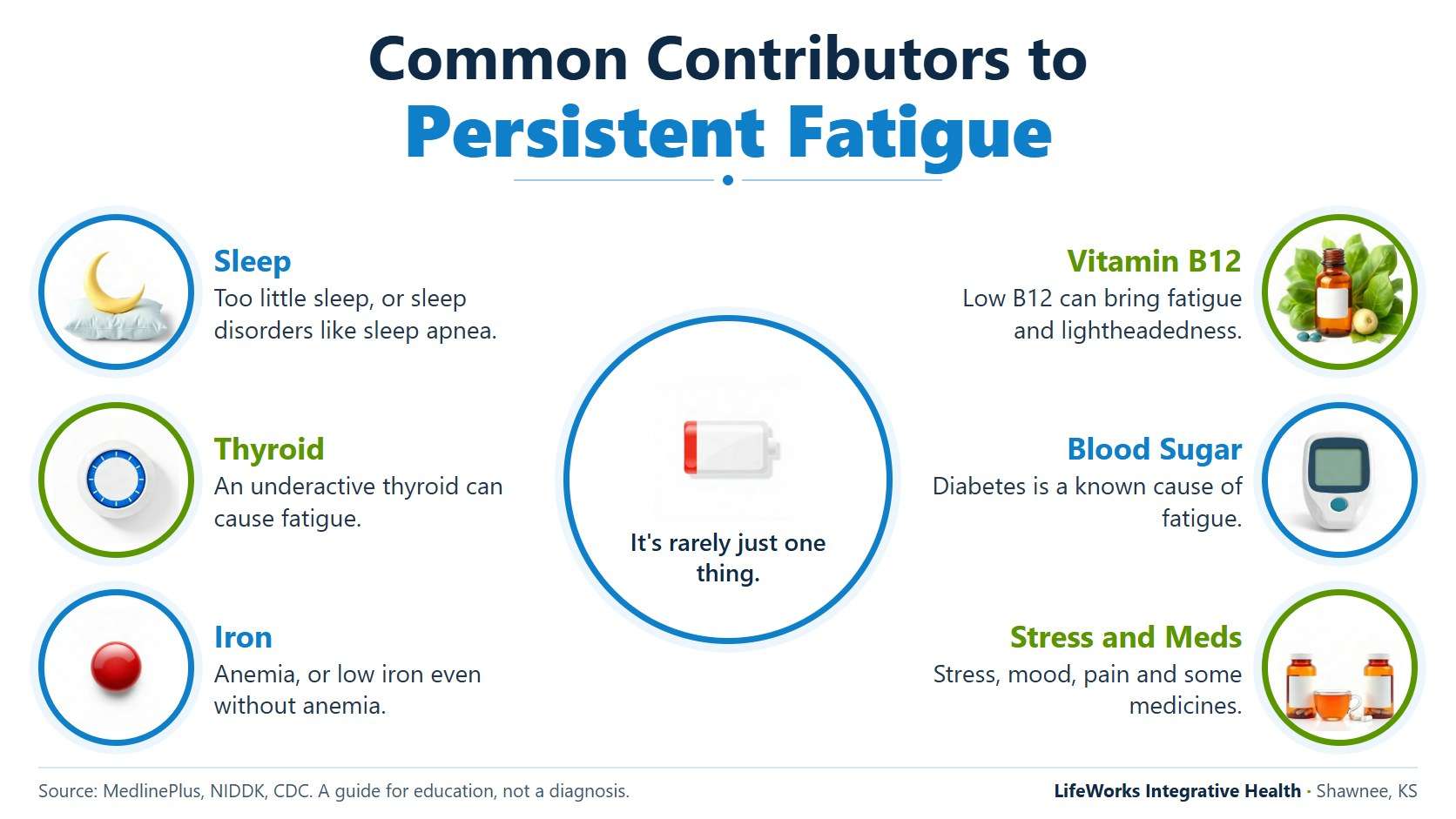
Common Contributors to Persistent Fatigue
MedlinePlus lists a long set of possible causes of fatigue. Here are the ones we think about most often when someone in Johnson County comes to us worn out.
Sleep
The CDC recommends 7 or more hours of sleep a night for adults ages 18 to 60, and 7 to 8 hours for adults 65 and older. Quantity is only half of it, though. According to the CDC, sleep disorders like sleep apnea can keep people from getting enough quality sleep, and a provider can order tests, including sleep studies, to check.
Thyroid
Your thyroid works like a thermostat for your metabolism. The NIDDK lists fatigue as a common symptom of hypothyroidism, an underactive thyroid, and reports that nearly 5 out of 100 Americans ages 12 and older have it. The same NIH page says it’s much more common in women and in people over age 60. If thyroid questions are on your mind, our article on birth control and thyroid issues covers one connection people often miss.
Iron and anemia
MedlinePlus lists anemia, including iron deficiency anemia, and iron deficiency without anemia as causes of fatigue. That second one matters. Your iron stores can run low before a basic blood count looks off.
Vitamin B12
MedlinePlus lists fatigue, lack of energy and lightheadedness as symptoms of vitamin B12 deficiency anemia. It also names long-term metformin use, long-term heartburn medicine use, some weight-loss surgeries, a strict vegetarian diet and digestive conditions like celiac disease as risk factors. Our guide to nutritional deficiency testing explains how these levels are checked.
Blood sugar
Diabetes is on the MedlinePlus list of conditions that can cause fatigue. If your energy crashes after meals or you’ve been told your blood sugar is creeping up, read our insulin resistance guide.
Stress, mood and pain
MedlinePlus also lists depression, grief and persistent pain as causes of fatigue. In our clinic we often see long stretches of stress go hand in hand with poor sleep, which makes the tiredness worse.
Medications
This one surprises people. According to MedlinePlus, medicines such as antihistamines, blood pressure medicines, sleeping pills, steroids, diuretics and some antidepressants may cause or worsen fatigue. Never stop a prescription on your own. Bring the full list to your provider and ask.
Practical rule: It’s rarely just one thing. A little short on sleep, a little low on iron and a lot of stress can add up to a dead battery.
When Fatigue Needs a Medical Evaluation Right Away
I’m not anti-medicine. If I have appendicitis, please don’t bring me supplements and a smoothie. Some fatigue needs prompt medical care, and that comes first.
MedlinePlus says to contact a provider right away if fatigue comes with any of the signs in the top rows below. It lists the signs in the bottom rows as reasons to make an appointment soon.
| What you notice along with fatigue | What to do |
|---|---|
| Confusion or dizziness | Contact a provider right away |
| Blurred vision | Contact a provider right away |
| Little or no urine, or new swelling and weight gain | Contact a provider right away |
| Thoughts of harming yourself | Get help right away |
| Fever, weight loss you can’t explain or regular sweats | Make an appointment soon |
| Constipation, dry skin, weight gain or feeling cold | Make an appointment soon |
| Waking many times a night, or frequent headaches | Make an appointment soon |
If any of the “right away” signs fit, don’t wait for a clinic visit. Call your doctor, or go to urgent care or the ER.
ME/CFS: What It Is and What It Isn’t
ME/CFS is real, it’s serious, and it’s different from ordinary tiredness. The CDC describes it as a serious, often long-lasting illness that keeps people from doing their usual activities. According to the CDC, up to 3.3 million people in the United States may have ME/CFS, and more than 9 in 10 of them have not been diagnosed.
The core symptoms
The CDC’s guidance for clinicians lists four core symptoms:
- Reduced ability to do daily activities, along with fatigue.
- Post-exertional malaise (PEM), which means symptoms get worse after physical or mental effort.
- Unrefreshing sleep.
- Trouble thinking or memory problems, or symptoms that get worse when standing up (called orthostatic intolerance).
The CDC says ME/CFS is diagnosed when these symptoms last six months or longer. The CDC also says there’s no confirmatory test, so providers have to rule out other illnesses that could explain the symptoms first.
What that means for you
According to the CDC, there is no known cure or approved treatment for ME/CFS, though some symptoms can be treated or managed. So be wary of anyone who promises to fix it. ME/CFS needs a proper diagnosis from a qualified provider and coordinated care over time.
At LifeWorks Integrative Health, we don’t diagnose or treat ME/CFS as a specialty. What we can do is help look for other contributors to fatigue, and work alongside your medical team if you’ve been diagnosed.
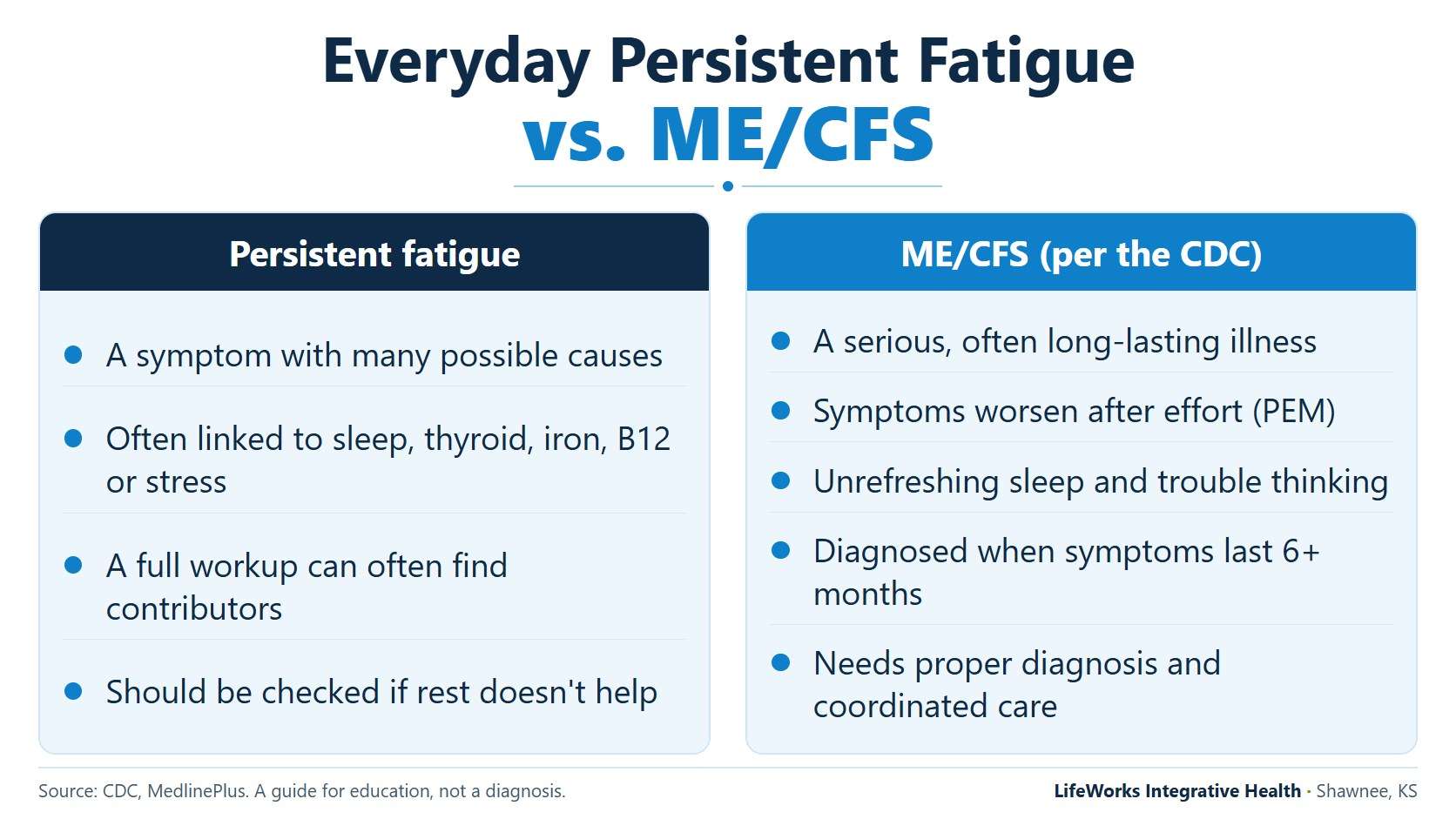
Clinical takeaway: If you feel much worse a day or two after a normal outing or a busy day at work, tell your provider. That pattern, called PEM, is an important clue.
How We Look for the Why in Shawnee
Labs look normal, but normal isn’t optimal. A result can sit inside the reference range and still be part of the story when you look at the whole picture. That’s why our functional medicine team starts with you, not a single number.
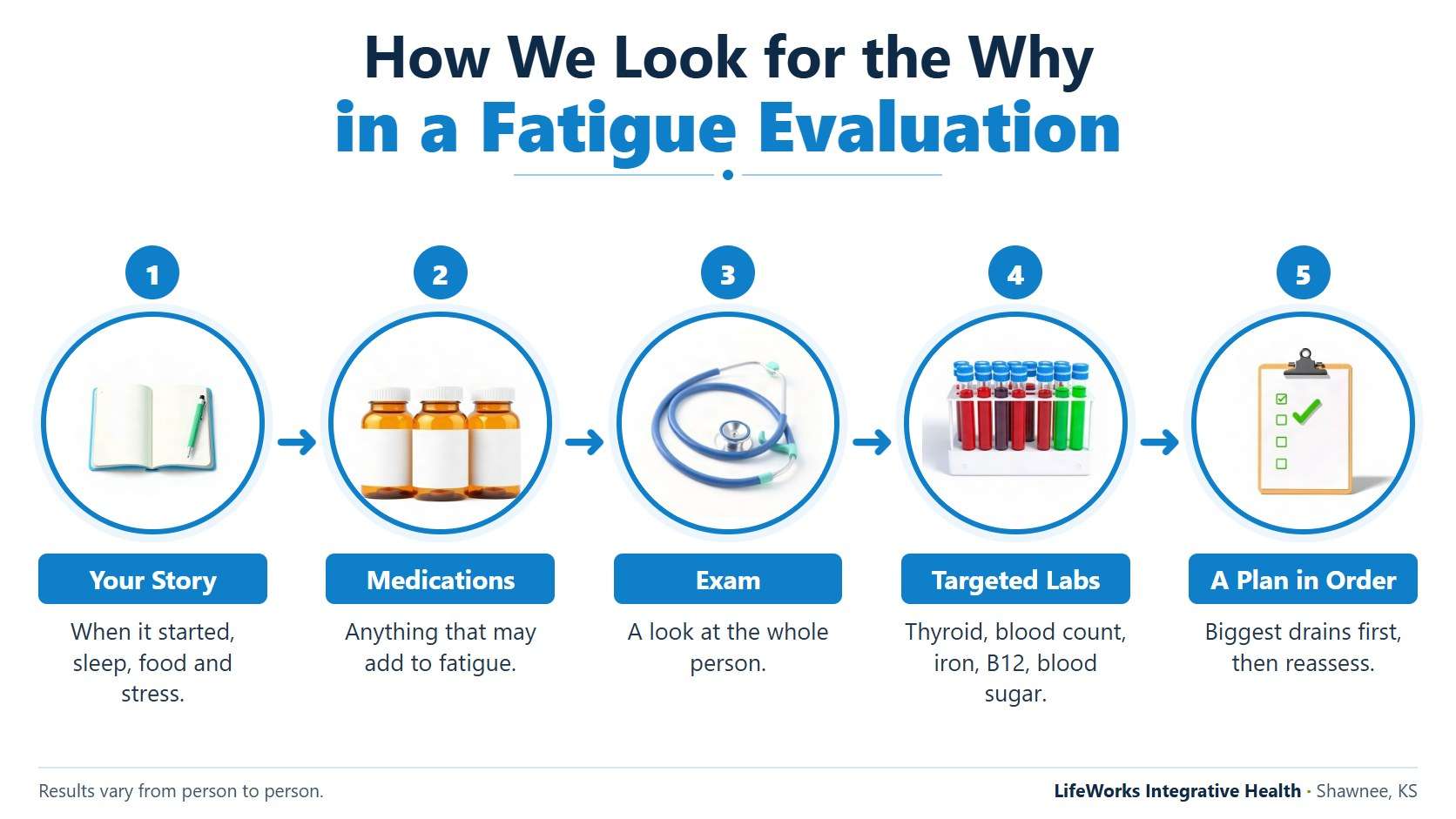
Think of it like a mechanic. You have to look under the hood before you fix the engine. Here’s what an evaluation for fatigue at our clinic usually looks at:
- Your story. When the tiredness started, what makes it better or worse, how you sleep, what you eat and how much stress you carry.
- Your medications and supplements. Anything on the list that may add to fatigue.
- An exam. A hands-on look at the whole person, not just the symptom.
- Targeted labs. These may include thyroid markers, a blood count, iron stores, B12, vitamin D and blood sugar markers, chosen based on your history.
- A plan in order. We work on the biggest drains first, then reassess.
Want to know more about the testing side? Our article on functional medicine labs explains what we order and why. And if your tiredness comes with trouble focusing, our guide to what causes brain fog is worth a read.
Our team includes chiropractors, a nurse practitioner and a physical therapist under one roof. That way, if something on your labs needs medical follow-up, we can coordinate it instead of sending you on a runaround.
What You Can Do at Home Starting This Week
Don’t aim for perfect. Aim for better. These habits won’t replace a workup, but they support whatever your provider finds.
- Protect your sleep window. Keep the same bedtime and wake time most days, and aim for the hours the CDC recommends for your age.
- Eat regular meals. Pair protein with your carbs so your energy doesn’t spike and crash.
- Keep a fatigue log. Write down your energy, sleep, meals and activity for two weeks. It’s one of the most useful things you can bring to an appointment.
- Bring your medication list. Include over-the-counter sleep aids and allergy pills.
- Pace yourself. If effort leaves you wiped out for days, don’t push through. Tell your provider instead.
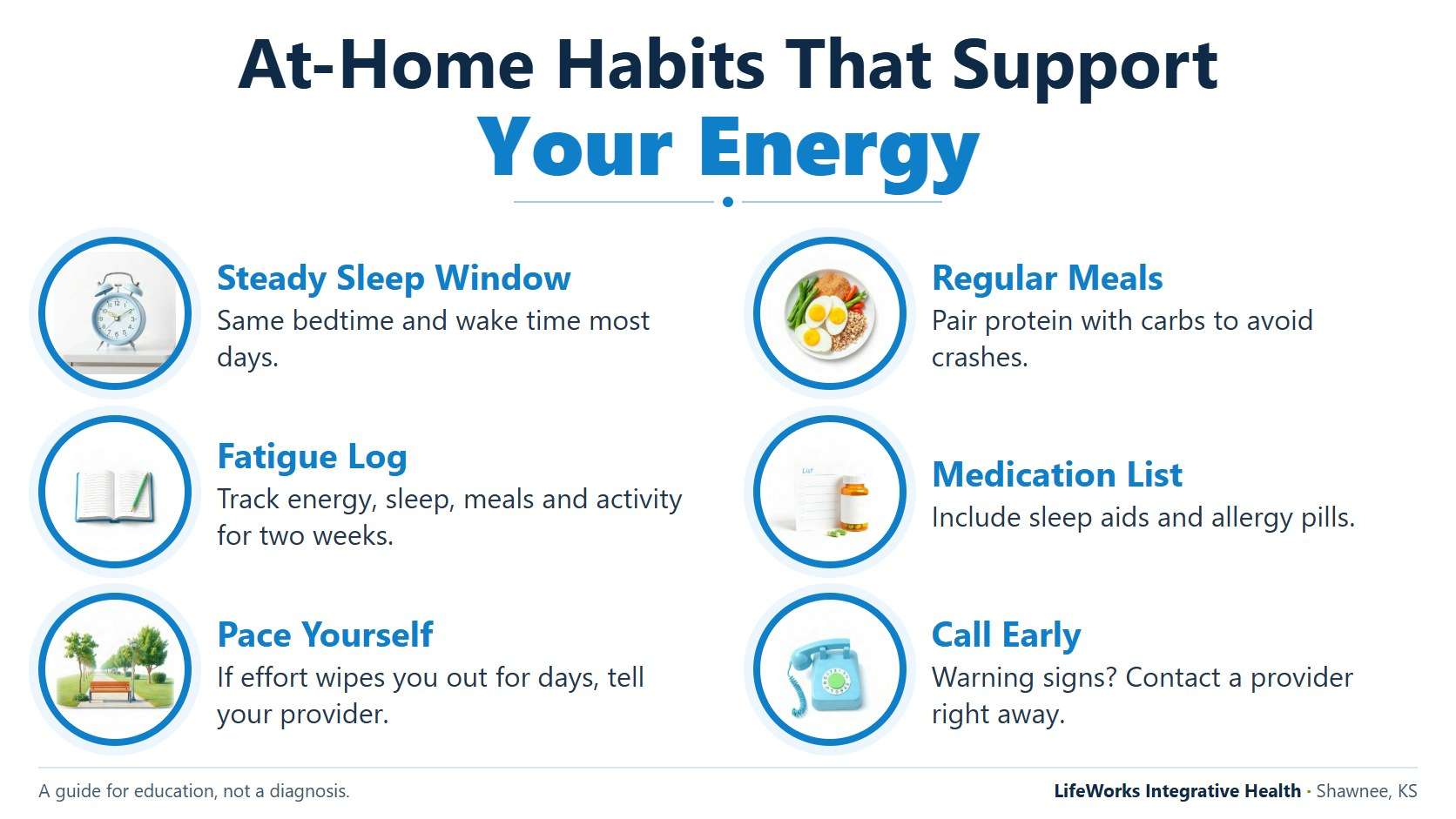
Practical rule: A two-week fatigue log beats a two-minute memory. Patterns show up on paper that you’d never notice day to day.
Common Questions About Chronic Fatigue Treatment
What kind of doctor should I see for chronic fatigue?
Start with a provider who will take a full history and order the right labs. For many people that’s a primary care provider or a functional medicine team. If ME/CFS is suspected, you may also need a specialist who knows the condition.
What blood tests are done for fatigue?
It depends on your history. Common ones include a blood count, thyroid tests, iron studies, B12 and blood sugar markers. MedlinePlus notes that B12 testing can include a serum B12 level and related markers like methylmalonic acid.
Is chronic fatigue the same as ME/CFS?
No. Chronic fatigue is a symptom with many possible causes. ME/CFS is a specific illness with its own core symptoms, including post-exertional malaise, and the CDC says it requires symptoms lasting six months or longer.
Can chronic fatigue treatment help if my labs are normal?
Sometimes. Normal labs can rule out some serious problems, which is good news. But sleep, stress, medications and day-to-day habits don’t always show up on a lab report, so the full history still matters.
Do you see patients from outside Shawnee?
Yes. Our clinic is in Shawnee, and we see people from across Johnson County and the Kansas City area, including Lenexa, Olathe and Overland Park.
You deserve answers, not just “you’re getting older.” If you’re tired of being tired, our team can look at your sleep, your labs, your medications and your stress, and help find what’s draining the battery. Call (913) 441-2293 or book an appointment online. Our clinic is at 19701 W 65th Terrace, Shawnee, KS 66218, and we’re rated 5.0 across more than 150 Google reviews.
Sources
- MedlinePlus, National Library of Medicine. Fatigue.
- Centers for Disease Control and Prevention. About ME/CFS.
- Centers for Disease Control and Prevention. Diagnosing ME/CFS (for health care providers).
- National Institute of Diabetes and Digestive and Kidney Diseases. Hypothyroidism (Underactive Thyroid).
- MedlinePlus, National Library of Medicine. Anemia: B12 deficiency.
- Centers for Disease Control and Prevention. About Sleep.
This article is for education and isn’t medical advice. Talk with your own provider about your situation.