Insulin resistance often shows up long before diabetes does, and that's exactly why so many people feel dismissed. You're told to eat less sugar, move more, and come back later, but you still don't have a real plan. At LifeWorks Integrative Health, 19701 W 65th Ter, Shawnee, KS 66218, 913-441-2293, we see people from Overland Park and across Johnson County and the southwest Kansas City metro who need more than generic advice, they need a care plan that connects the dots.
Insulin resistance treatment Kansas City has to start with the fact that this problem is common, measurable, and worth addressing early. In a 2003 NHANES analysis, insulin resistance affected about 22% of U.S. adults older than 20, and a later NHANES analysis found about 40% of adults aged 18 to 44 were insulin-resistant by HOMA-IR. That's not a niche issue, and it's not solved by one lecture about carbs.
Why Insulin Resistance Demands More Than Generic Diet Advice
A lot of patients in the Kansas City metro hear the same sentence, “just lose weight.” That advice misses the issue, because insulin resistance is a metabolic pattern, not a moral failing. It's especially frustrating when you're doing some things right already, but your labs, energy, or waistline still aren't cooperating.
Insulin resistance treatment Kansas City should be rooted in the reality that there are no FDA-approved drugs specifically for insulin resistance, so first-line care centers on lifestyle change, especially calorie reduction, lower-glycemic eating, and physical activity. The same evidence base notes that losing just 5%–7% of body weight can help prevent or delay about 60% of diabetes, which is why this condition is treated as an early intervention milestone rather than a late-stage diabetes-only issue. What a functional medicine doctor does at LifeWorks fits naturally here because the work starts with assessment, not guesswork.
Practical rule: if nobody has reviewed your labs, movement patterns, sleep, and eating rhythm together, you probably haven't had a real insulin-resistance plan yet.
For a patient commuting from Overland Park to our Shawnee clinic, the difference is simple. A generic plan says “eat better.” A real plan asks what's driving the metabolic problem, what's measurable, and which part of your routine can change this month.
LifeWorks is built around Chiropractic, Physical Therapy, Regenerative Medicine, and Functional Medicine, and that matters because metabolic health rarely lives in one lane. Some patients need movement support, some need root-cause lab work, some need pain relief before they can exercise consistently, and some need all four.
What Insulin Resistance Actually Means for Your Body
Insulin is the hormone that helps move glucose from your blood into your cells. When your cells stop responding well to it, the pancreas has to push harder, and that strain can sit there for years before blood sugar finally crosses into prediabetes or type 2 diabetes. That's why insulin resistance feels invisible until it isn't.
Metabolic syndrome is the clinical cluster that often travels with insulin resistance. It's diagnosed when a patient meets at least 3 of 5 criteria, including waist circumference, high triglycerides, low HDL cholesterol, high blood pressure, and high fasting glucose. That gives you something concrete to watch instead of vague wellness language.
How clinicians quantify the problem
One practical benchmark is HOMA-IR, a lab-based estimate of insulin resistance that helps clinicians see trouble before glucose becomes obviously abnormal. If your fasting glucose looks “normal” but your body is still working too hard to manage it, HOMA-IR can reveal the strain earlier. That's useful because waiting for diabetes means you've already lost time.
A lot of people also want a shortcut, usually through supplements or medication. There's a reason that search keeps happening, but the clean answer is that current medical guidance still places the emphasis on structured lifestyle change, not a pill that treats insulin resistance by itself.
Clinical takeaway: lab numbers matter because insulin resistance is not defined by how you feel on a busy Tuesday, it's defined by what your body is doing under the hood.
That's why this condition belongs in a real treatment pathway. If you've already been told you have prediabetes, obesity, PCOS, or metabolic syndrome, you're not overreacting by wanting a more precise answer. You're asking the right question.
What Drives Insulin Resistance in the Kansas City Metro
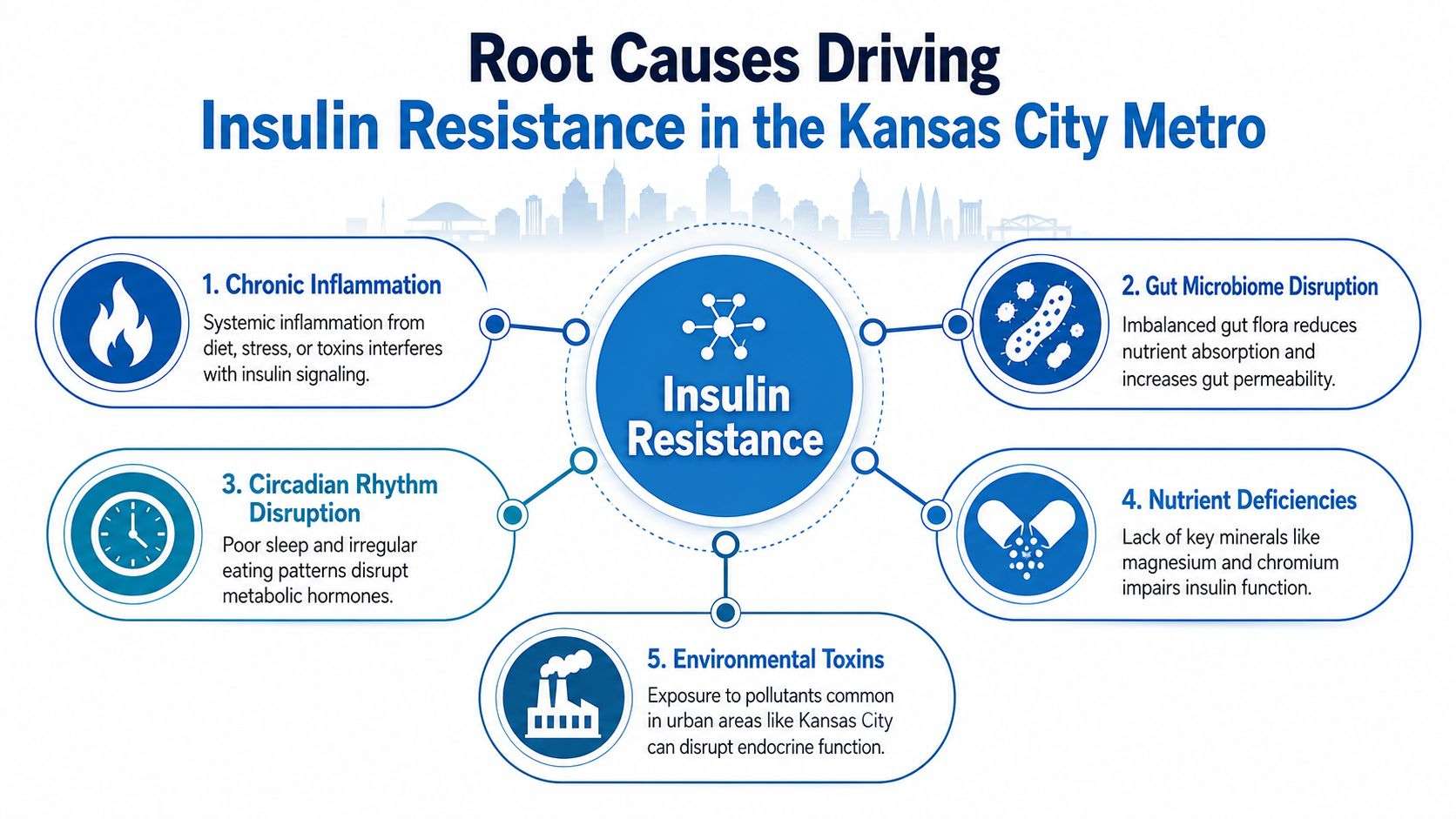
The biology is rarely one thing. Inflammation, gut disruption, poor sleep timing, chronic stress, and reduced movement all pile onto each other until insulin signaling gets blunt. That's why people can eat “pretty well” and still have the problem.
Why daily life in suburban KC matters
A commute from Lenexa or Olathe, long hours at a desk, irregular lunch breaks, and winter days with little daylight all push the body toward more sedentary, less rhythmic behavior. None of that means insulin resistance is inevitable, but it does mean the metro's typical routine can make it harder to recover if you don't build structure around food, sleep, and movement.
A recent review found first-line care still centers on dietary change plus physical activity, but it also highlighted gut microbiota modification as an emerging and potentially strong recommendation for reducing insulin resistance. That's important because the conversation is moving beyond “just cut carbs” and toward a more complete model of metabolic support. A recent review on insulin resistance and gut microbiota is a good example of where the evidence is heading.
What isn't reversible, and what can still change
Cleveland Clinic notes that contributors such as genetics and age aren't reversible, so no honest clinician should promise a simple “reversal.” What can change is the downstream physiology, including body composition, activity tolerance, sleep timing, and the habits that keep insulin demand high.
That's where the local care question gets practical. If your routine is keeping you stuck, you need a plan that changes the routine, not just the grocery list. That can mean nutrition adjustments, movement coaching, stress work, and, for some patients, support from a clinic that can coordinate all of that instead of handing you a pamphlet.
How the LifeWorks Integrative Approach Addresses Metabolic Dysfunction
Single-modality care often misses the load-bearing problem. A nutrition-only plan can stall if pain keeps you from exercising. An endocrinology visit can be medically useful but still leave you without movement strategy or stress support. A massage of the symptoms is not the same as a metabolic plan.
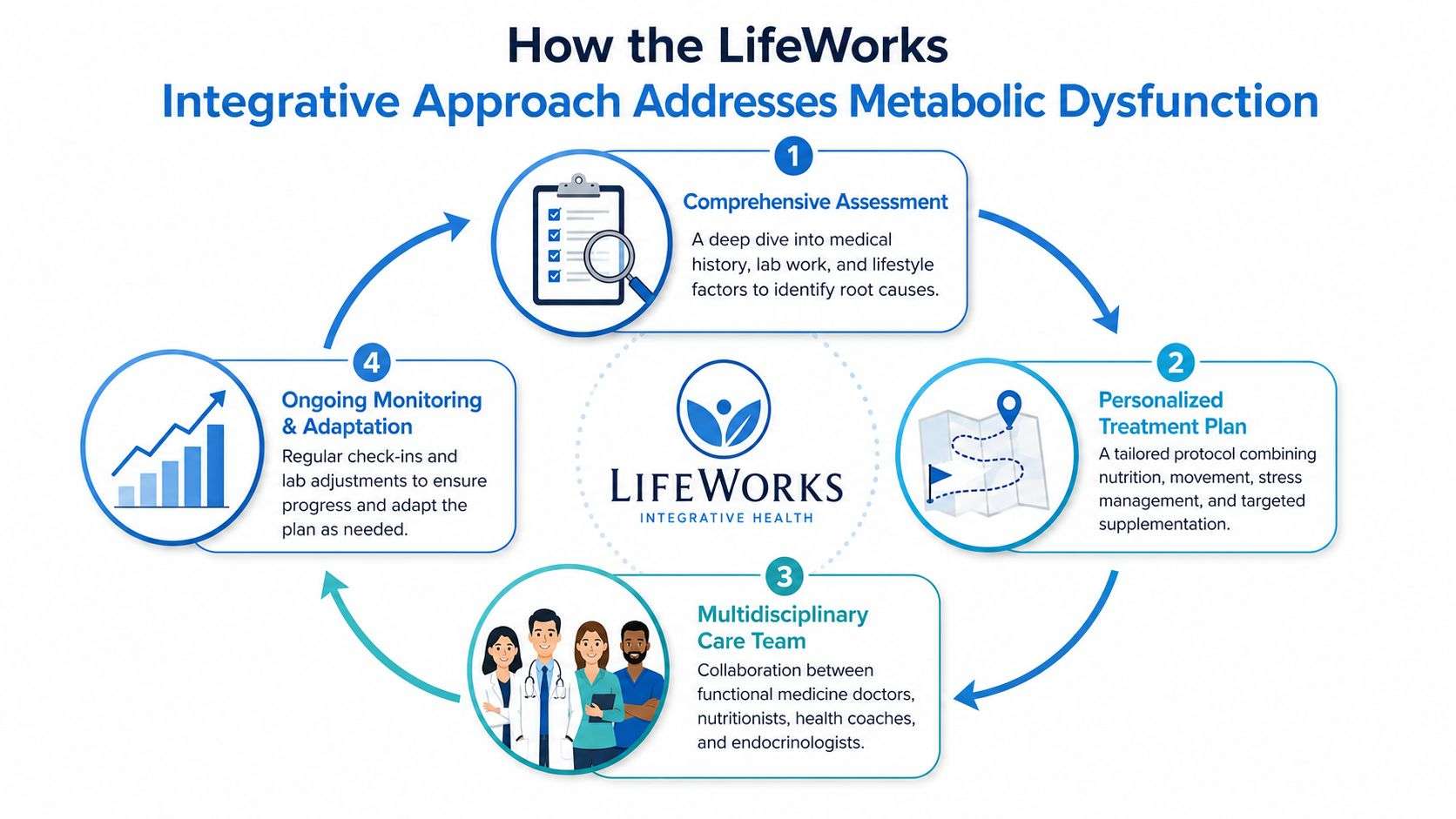
At LifeWorks, Functional Medicine looks for the drivers behind the pattern, then connects them to the other pillars. That can mean advanced lab review, including markers such as HOMA-IR, and, when appropriate, broader functional workups that help explain why progress has been slow. Functional medicine labs at LifeWorks are one place that process starts.
What coordination looks like in real life
Physical Therapy matters when pain, weakness, or poor mechanics make exercise inconsistent. If your knees or low back flare every time you try to get active, the metabolic plan has to include a way to move safely. Chiropractic care can support patients whose spinal or mechanical dysfunction is limiting comfort and activity, while Regenerative Medicine can be relevant when metabolic dysfunction has also accelerated joint degeneration and the body needs targeted support.
For some patients, the treatment question is not “Which one service is best?” It's “Which combination lets me follow through?” That's where the multi-disciplinary setup matters most.
A concise way to think about the pillars
- Functional Medicine: organizes the metabolic picture and helps interpret patterns.
- Physical Therapy: restores the ability to move without constantly flaring symptoms.
- Chiropractic: addresses structural and biomechanical barriers that keep activity limited.
- Regenerative Medicine: may be considered as an adjunct for selected musculoskeletal problems that interfere with rehab.
The best plan is the one you can repeat when life gets busy, not the one that looks perfect for three days.
For a patient driving in from Prairie Village, that often means one coordinated place to ask metabolic, pain, and movement questions without bouncing between offices. That's also why patients with a mix of insulin resistance and joint pain often do better when the care team communicates in real time.
Evidence-Based At-Home Strategies You Can Start This Week
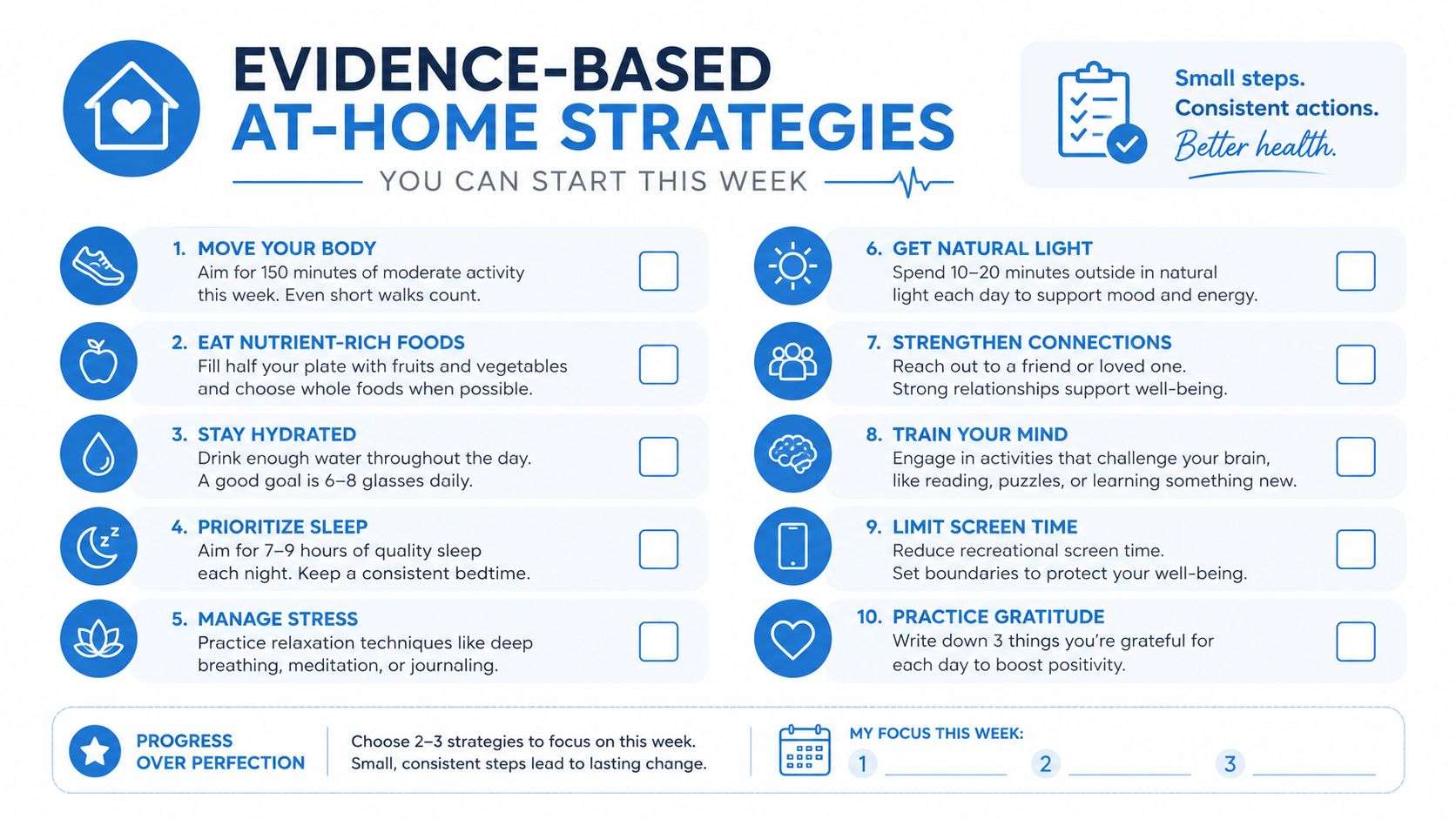
People usually want a big hack, but the basics still matter. The goal is to lower insulin demand, improve glucose handling, and make your body more responsive to the insulin it already has. That happens through daily structure, not perfection.
Start with timing, not just calories
Time-restricted feeding typically uses an eating window of 6 to 8 hours per day, followed by 16 to 18 hours of fasting, and it has been studied for improving insulin signaling and glucose homeostasis. That doesn't mean everyone should jump into it immediately, especially if you have a history of disordered eating, pregnancy, or medication-related blood sugar risk. It does mean meal timing is a real lever, not wellness fluff.
Build the meal pattern around inflammation control
Focus on foods that keep you full and reduce glucose spikes, then cut back on the ultra-processed patterns that crowd out protein, fiber, and micronutrients. If you need a practical framework, how to reduce systemic inflammation is a useful next read because insulin resistance and inflammation often travel together.
Move in a way you can repeat
You do not need a heroic workout. You need a repeatable one. Resistance training, walking after meals, and short movement breaks during the workday all help muscle tissue pull in glucose more effectively.
Treat sleep and stress like metabolic inputs
Late nights, short sleep, and constant stress make glucose control harder. If your evenings are chaotic, your metabolic plan probably is too. Breathing drills, screen cutoffs, and a steady wake time are boring, but boring works.
Use supplements as adjuncts, not substitutes
If a clinician has already reviewed your case, supportive categories can include an omega-3 inflammation-support formula, a gut-healing protocol, or berberine-based glucose-support options from Dr. Matt's supplement line at drmattgianforte.com. Those tools belong in a broader plan, not as replacements for sleep, movement, or food structure.
Choosing the Right Care Pathway for Your Situation
Not everyone needs the same starting point. If your blood sugar is clearly abnormal, you have multiple cardiometabolic conditions, or you may need medication management, endocrinology can be the right first stop. If your problem is early, mixed with pain, stress, low activity, or stubborn weight changes, a functional medicine visit may be a better fit.
Where local care fits
Kansas City has multiple options, including Saint Luke's Diabetes Education Centers in Overland Park and Parkville, North Kansas City Hospital diabetes care, and community clinics listed by the Kansas Community Health Worker Coalition in Kansas City, Kansas and Shawnee. Those pathways matter because access, insurance, and severity all affect what makes sense next. If cost or coverage is the barrier, local community care is often more realistic than waiting for the perfect specialty visit.
A simple decision filter
- Choose endocrinology if you need medication decisions, complex diabetes management, or tighter medical oversight.
- Choose community diabetes education if you need affordable, practical coaching and you're building basics.
- Choose an integrative clinic if you want a broader root-cause workup, movement support, and coordinated care.
If you're a federal employee dealing with OWCP paperwork, it also helps to ask whether the clinic can document care clearly and support claims properly. That's not a small detail when treatment decisions and access are tied together.
Answers to Your Most Pressing Insulin Resistance Questions
What parts of insulin resistance are actually reversible?
The biology is partly modifiable and partly not. Genetics and age aren't reversible, but the metabolic expression of insulin resistance often changes when sleep, movement, food timing, and body composition improve. If you want a practical starting point, ask about functional medicine, or review Chiropractic Care and Physical Therapy if pain is keeping you from exercising.
How long does it take to see changes?
That depends on what's driving the problem and how consistent you can be. Some people notice better energy and fewer cravings before lab markers shift, while others need a longer stretch of structured care before HOMA-IR or fasting glucose improves. The key is that improvement should be tracked, not guessed.
Do newer microbiome-focused approaches work yet?
They're promising, but they're not the whole standard of care. The research conversation is moving toward gut microbiota modification, yet the strongest foundation is still diet change plus physical activity, with individualized care layered on top. That's why Functional Medicine and Regenerative Medicine should be viewed as adjunctive tools, not magic bullets.
What if I already have prediabetes or PCOS?
Then the question isn't whether insulin resistance matters, it's how aggressively you want to address it now. Earlier intervention gives you more room to change course, and a structured plan can include Regenerative Medicine when pain or joint degeneration is limiting movement, plus Functional Medicine when the metabolic picture needs deeper sorting. If you've also got back pain, Back Pain and Disc Herniation care may help you move enough to follow the plan.
Should I start with a lifestyle clinic or a diabetes educator?
If you need very practical coaching, community diabetes education can be the fastest and most affordable entry point. If you want a multi-component approach, especially when pain, stress, and metabolic issues are tangled together, a clinic like LifeWorks can coordinate more of the picture under one roof. If you're searching for chronic fatigue functional medicine KC or knee pain treatment Overland Park, the right starting point is the one that solves the barrier keeping you stuck.
If you're driving in from Overland Park and you're tired of managing symptoms instead of solving the pattern, our Shawnee team can help you sort out the metabolic, movement, and lifestyle pieces together. Call 913-441-2293 for a free consultation, or visit LifeWorks Integrative Health to see how our multi-disciplinary care can fit your situation without the guesswork.