
Treating nerve pain naturally works best when you combine anti-inflammatory nutrition, targeted exercise to improve circulation, and specific nutrients such as alpha-lipoic acid and B-vitamins with care that addresses root causes like structural compression and metabolic dysfunction. ALA at 600 to 1800 mg daily has been shown to reduce numbness and tingling by 30%, and daily 1000 mcg vitamin B12 reduced nerve pain intensity by 35% in 65% of patients when deficiency was part of the problem.
If you're reading this in Overland Park, there's a good chance you're doing what many people do first. You stretch a little, change shoes, buy a supplement, try to ignore the burning in your feet at night, and hope the pins-and-needles in your hands fade by morning. Then the symptoms keep showing up. Sleep gets lighter. Walking feels strange. Sitting at your desk or driving across Johnson County starts to aggravate everything.
That frustration makes sense. Nerve pain rarely comes from one problem, so one isolated remedy rarely fixes it. At LifeWorks Integrative Health, 19701 W 65th Ter, Shawnee, KS 66218, 913-441-2293, patients commuting from Overland Park to our Shawnee clinic often tell us the same thing: they've tried “natural” options, but no one explained how structural, inflammatory, and metabolic issues can overlap. That's where a coordinated plan matters.
Dr. Matthew Gianforte, DC, approaches nerve pain as a whole-system problem. In a clinic built around Chiropractic, Physical Therapy, Regenerative Medicine, and Functional Medicine, the question isn't just how to calm symptoms today. It's what's keeping the nerve irritated in the first place, and what combination of care gives you the best shot at lasting relief.
The Frustrating Reality of Nerve Pain in Overland Park
A lot of nerve pain often begins subtly. Your toes feel oddly numb after dinner. Your fingertips tingle while typing. You wake up because your feet feel hot, buzzing, or sensitive to the sheet touching them. Then the pattern becomes your routine.
For many people in Overland Park, it affects ordinary parts of the day more than dramatic moments. Driving, standing in the kitchen, working at a laptop, walking the dog, carrying groceries, even trying to relax on the couch can become irritating. The hardest part is that the symptoms don't always “look” serious from the outside, even when they wear you down from the inside.
Why generic advice often falls short
A simple list of home remedies can help a little, but it often misses the bigger picture. If your nerve pain is coming from a combination of spinal irritation, poor blood sugar control, nutrient deficiency, and ongoing inflammation, then using one cream or one supplement won't change the whole chain.
That's why people often say they've “tried natural treatment” when what they really tried was one piece of natural treatment.
Clinical reality: Lasting nerve relief usually takes more than symptom management. It takes a plan that matches the actual cause.
At LifeWorks Integrative Health, a short drive from Overland Park, we see this especially often in patients from Johnson County who spend long hours sitting, commuting, training hard on weekends, or juggling high stress and inconsistent sleep. Those patterns can aggravate nerve irritation even when someone is otherwise trying to live “healthy.”
What works better than chasing symptoms
The most effective natural approach is layered. It usually includes movement that improves circulation, nutrition that lowers inflammatory load, targeted nutrients that support nerve health, and treatment that reduces mechanical pressure on irritated nerves.
A few examples of the trade-offs matter:
- Topical pain relief can help temporarily, but it won't correct a pinched nerve pattern, unstable blood sugar, or a functional nutrient deficiency.
- Supplements can support nerve healing, but they won't overcome ongoing spinal compression or poor movement mechanics on their own.
- Exercise helps, but if it's too intense or poorly chosen, it can irritate already sensitive tissue.
The four-pillar model matters. A Chiropractic Care plan may reduce nerve pressure. Physical Therapy can retrain the way you move. Functional Medicine can identify metabolic and nutrient barriers. Regenerative Medicine may be considered as an adjunct in select cases when tissue repair support is appropriate.
Why Is This Happening? Understanding the Roots of Your Nerve Pain
Neuropathy means damage or dysfunction affecting nerves. In plain language, the nerve is either irritated, undernourished, compressed, inflamed, or healing poorly. That can show up as burning, tingling, numbness, hypersensitivity, weakness, or an odd “electric” sensation.
The key mistake is assuming all nerve pain is the same. It isn't. One person may have symptoms driven mainly by disc pressure in the spine. Another may have metabolic dysfunction. A third may have both.
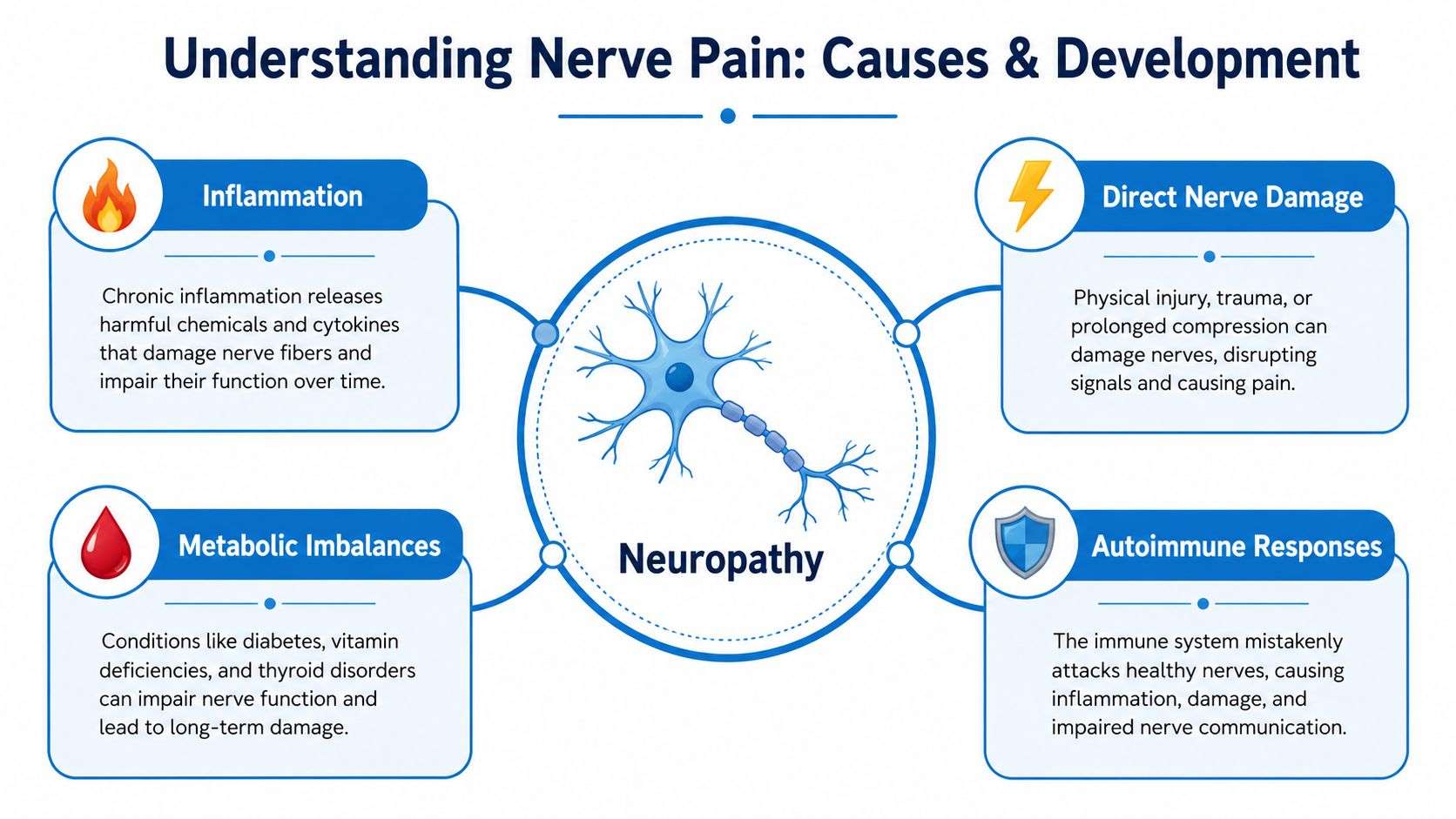
Four drivers I want you to understand
The clearest way to think about nerve pain is to separate it into a few major buckets.
| Driver | What it means | Why it matters |
|---|---|---|
| Inflammation | Chemical irritation around nerves | Inflamed tissue becomes more pain-sensitive |
| Direct compression | A nerve is pinched or crowded | Signals can become painful, weak, or numb |
| Metabolic imbalance | Blood sugar and energy regulation are off | Nerves don't repair or function well |
| Nutrient deficiency | The body lacks usable nerve-support nutrients | Nerves lose the raw materials they need |
For people in the Kansas City metro, these often overlap. Long commutes, desk work, stress, inconsistent meals, poor sleep, and exercise patterns that swing between inactivity and “all in” weekends can all contribute.
Why “eating healthy” still may not solve it
Functional Medicine offers a crucial perspective. Some people are eating well and still dealing with nerve symptoms because absorption and metabolism aren't working correctly.
A 2024 discussion cited from the American Journal of Clinical Nutrition notes that most natural-remedy advice stays too generic and misses functional deficiencies tied to gut permeability or metabolic syndrome, which may be the primary root cause for up to 40% of peripheral neuropathy cases in non-diabetic patients. It also notes that a significant portion of neuropathy patients may have functional B12 or vitamin D deficiencies related to malabsorption rather than simple dietary lack, which is why targeted testing matters more than guessing with supplements alone. This is exactly why more advanced workups such as functional medicine lab testing can be so useful in the right patient.
If your diet looks good on paper but your nerve symptoms keep progressing, the issue may be what you absorb and use, not just what you eat.
Structural problems are still part of the story
Natural care also fails when it ignores mechanics. If a disc issue, postural collapse, pelvic imbalance, or chronic muscle guarding is putting pressure on a nerve pathway, no amount of turmeric or clean eating will fully solve that mechanical stress.
That's why I never like the false choice between “natural” care and “structural” care. If the pressure is physical, the plan has to include physical solutions.
For some patients from Merriam or Prairie Village, the root issue is less about neuropathy in the broad sense and more about a spinal pattern that refers pain into the arm or leg. That distinction changes treatment.
What Can I Do Right Now? Foundational At-Home Strategies
If you want to know how to treat nerve pain naturally at home, start with habits that lower irritation without overloading the system. The goal isn't to do everything. It's to do the right few things consistently.
One of the most practical starting points is moderate movement. As noted in WebMD's overview of nonprescription treatments for nerve pain, regular, moderate exercise can support pain management by stimulating endorphins and improving circulation to distal nerves in the legs and feet. In practice, that means the right movement often helps more than total rest.
Start with circulation, not intensity
If your nerves are irritable, don't jump into aggressive workouts. Start with gentle, repeatable patterns.
A research-backed self-care protocol found that warm Epsom salt foot soaks, low-impact aerobic exercise, and mindfulness-based stress reduction improved microcirculation by 22 to 30%, reduced neuropathic pain intensity by 18 to 25% within 6 weeks, and improved functional mobility in 45% of patients when used as a structured routine, according to the verified protocol data provided. The same protocol emphasized keeping soak temperature at 37 to 40°C, avoiding temperatures above 42°C, and keeping exercise below 60% of heart rate max.
A simple version looks like this:
- Warm soaks: Use 1/2 cup Epsom salt for 10 to 12 minutes, 3 to 4 times weekly if heat feels soothing and your skin sensation is reliable.
- Low-impact cardio: Walk or swim for 30 minutes a day, 5 days a week at an easy pace.
- Stress downshift: Use 20 minutes a day of mindfulness-based stress reduction if stress clearly flares symptoms.
Practical rule: If an activity leaves your nerve symptoms more agitated for the rest of the day, it was probably too much.
Reduce mechanical irritation in daily life
Your home and work setup matter more than is commonly thought. A slouched laptop posture, a wallet in the back pocket, crossing legs for hours, or repetitive wrist extension at a keyboard can all keep nerves irritated.
Make these changes first:
- Change your sitting position often. Nerves hate static load.
- Support your feet. Firm, stable shoes are often better than flat unsupportive footwear.
- Raise screens to eye level. Neck and upper back position can affect arm and hand symptoms.
- Break up long drives. If you commute from Olathe or spend a lot of time in the car, stop feeding the compression pattern.
If you suspect a pinched nerve pattern rather than generalized neuropathy, this guide to pinched nerve relief can help you think through the mechanical side of the problem.
Use home care to build momentum, not to replace evaluation
At-home strategies are foundational, but they're not the full answer when symptoms are progressing, spreading, or affecting strength and balance. Home care works best when it lowers the noise enough for your body to respond better to a more targeted plan.
That's especially true if your symptoms are one-sided, linked to back or neck pain, or worsen with specific positions.
How Can I Fuel Nerve Repair Through Nutrition and Supplements?
Food can either support nerve recovery or keep the system inflamed and metabolically stressed. This doesn't mean you need a perfect diet. It means your nutrition should match the biology of healing.
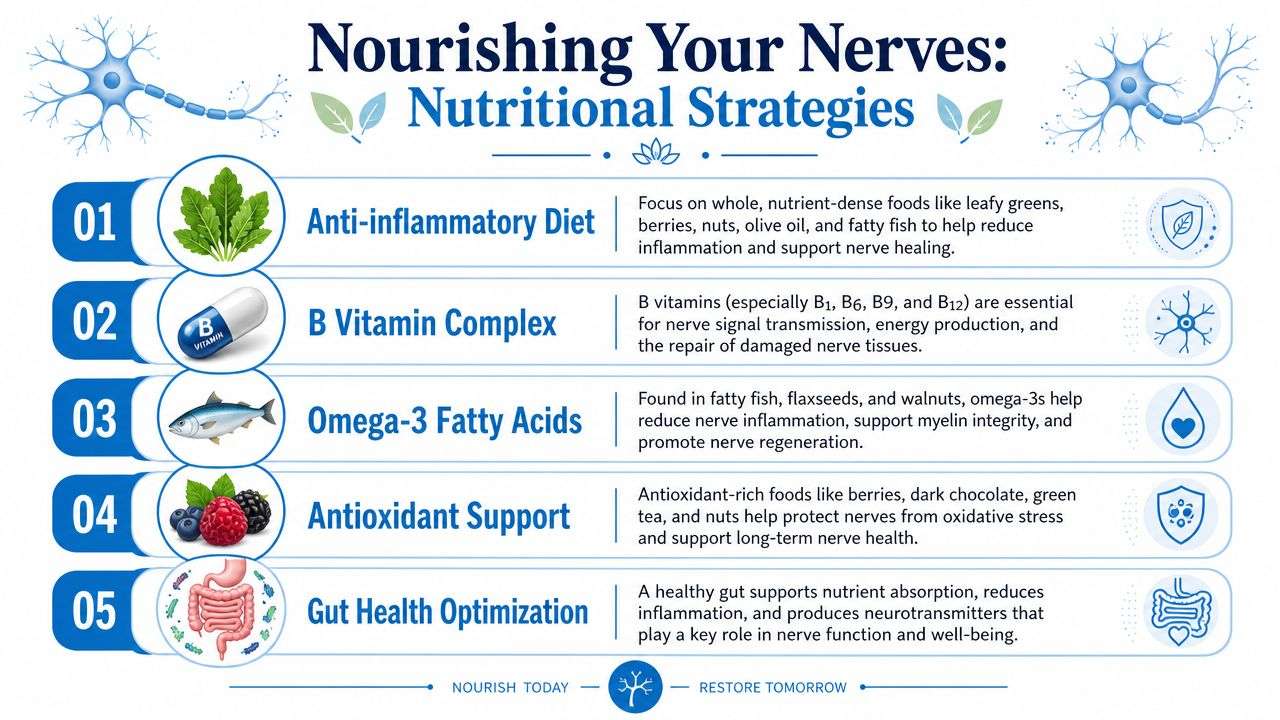
The first principle is simple. Nerves need stable blood sugar, adequate protein, anti-inflammatory fats, antioxidants, and enough key micronutrients to repair and signal normally. If you're trying to calm nerve pain while living on convenience food, alcohol, inconsistent meals, and low hydration, you're making the job harder.
The nutrients with the strongest practical evidence
Two categories stand out in the verified evidence.
A landmark 2012 systematic review in Pain found that alpha-lipoic acid significantly reduced neuropathic pain, with oral supplementation at 600 to 1800 mg daily for 3 to 4 months reducing numbness and tingling by 30%. In the same body of evidence, 600 mg daily intravenous ALA for 5 days improved burning and stabbing pain by 40%, and the review analyzed 39 randomized controlled trials involving over 5,000 patients. The review data are summarized through PubMed-indexed literature on alpha-lipoic acid and neuropathic pain.
A separate Journal of Neurology study found that 1000 mcg daily methylcobalamin B12 for 6 months reduced nerve pain intensity by 35% in 65% of patients, compared with a smaller response in the placebo group, according to the verified data set above. The broader B-complex pattern matters too, especially when B1, B6, and B12 are all relevant.
What to put on your plate
I like to keep food guidance practical. Build meals around protein, fiber-rich plants, and anti-inflammatory fats. Cut back on foods that spike blood sugar or leave you inflamed and depleted.
A useful place to start is Maximum Health Products' guide to anti-inflammatory eating, especially if you need a simple framework for meal planning rather than another list of foods to avoid.
Try to prioritize:
- Protein at each meal so tissue repair has building blocks.
- Colorful produce for antioxidant support.
- Omega-3 rich foods such as fatty fish, walnuts, and flax when tolerated.
- Lower-glycemic carbohydrate choices if blood sugar swings are part of the pattern.
How I think about supplements in practice
Supplements should support a plan, not substitute for one. The categories that make the most sense depend on your history, labs, medications, digestion, and symptom pattern.
Useful categories may include:
- An ALA-based nerve support formula when oxidative stress and neuropathy fit the picture
- A methylated B-complex when deficiency or poor intake is suspected
- An omega-3 inflammation-support formula for inflammatory load
- A gut-healing protocol when malabsorption or permeability is part of the case
- A magnesium support formula when cramping, stress, or deficiency signs are present
Verified protocol data also note that magnesium deficiency below 1.8 mg/dL should be corrected and that oral magnesium glycinate 400 mg daily or Epsom salt foot soaks may help reduce muscle spasms and inflammation when clinically appropriate.
Supplements work better when they match a documented need. Random stacking usually creates expensive urine, not a coherent treatment strategy.
For readers who want guidance on categories rather than brand hype, Dr. Matt's supplement line at drmattgianforte.com organizes products by mechanism, which is a smarter way to think about support than chasing whatever trend is popular online.
The LifeWorks Advantage How Integrative Therapies Unlock Healing
Natural remedies fail most often when they're used in isolation. That's the central problem. Nerve pain is rarely just nutritional, just structural, or just inflammatory. It's usually a blend.
A coordinated model works better because each pillar handles a different obstacle to healing. If you reduce inflammation but leave the nerve compressed, progress stalls. If you improve biomechanics but ignore metabolic dysfunction, healing stays incomplete. If you support nerve repair nutritionally but never retrain movement, symptoms can keep cycling.
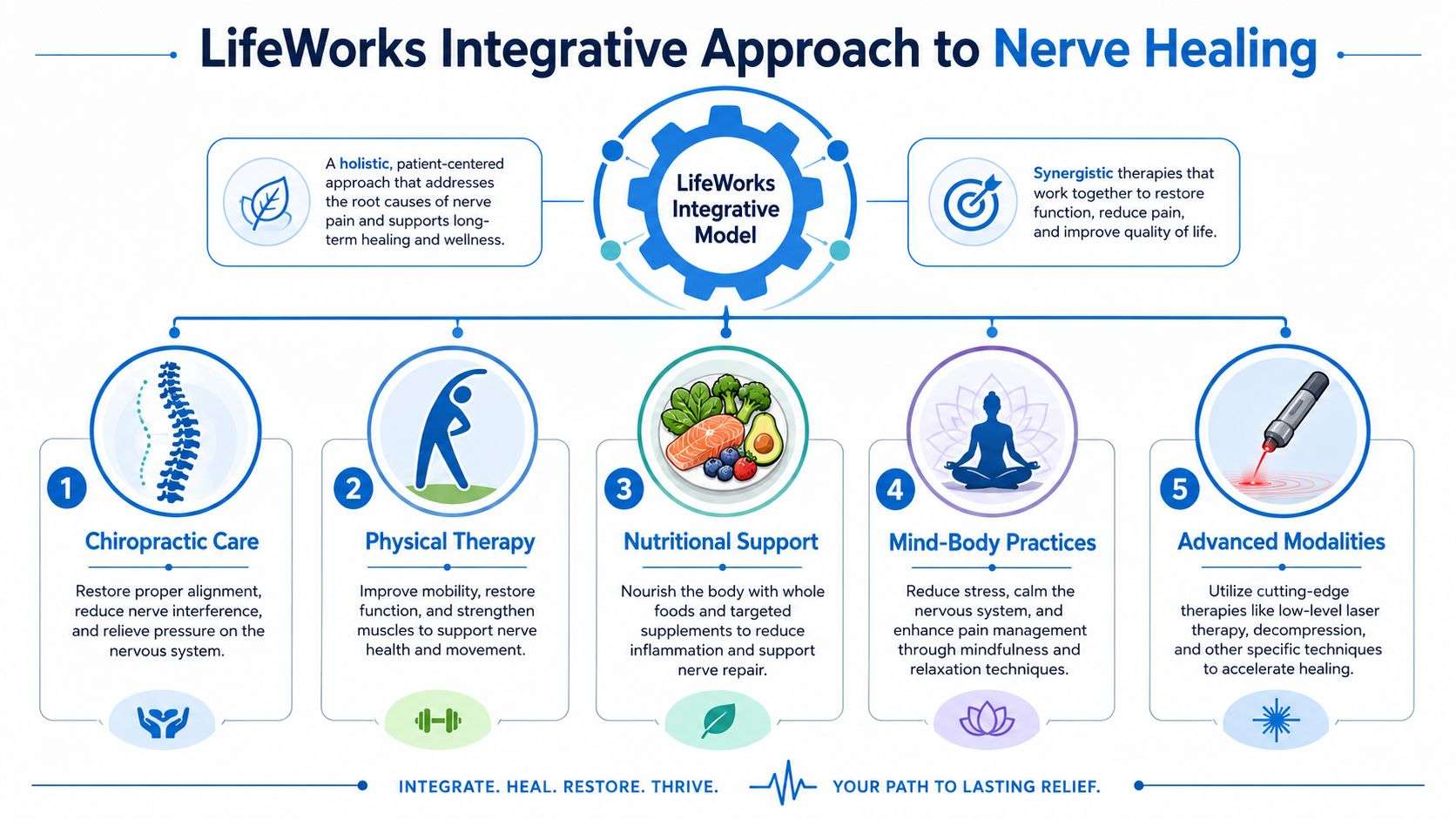
What each pillar adds
Here's how the pieces tend to fit together under one roof.
| Pillar | Main job in nerve pain care |
|---|---|
| Chiropractic | Reduce joint dysfunction and mechanical nerve irritation |
| Physical Therapy | Restore movement, strength, gait, and tissue tolerance |
| Functional Medicine | Identify metabolic, inflammatory, and nutrient barriers |
| Regenerative Medicine | Add repair-focused adjuncts in select cases |
This is why integrated care often outperforms a single-modality plan. One provider may calm pain. A coordinated team can address the reason it keeps returning.
What advanced modalities can do that home care can’t
Sometimes the bottleneck is deeper tissue healing and nerve regeneration. That’s where more advanced therapies enter the conversation.
According to the verified data, a 2025 meta-analysis in the Journal of Pain Research reported that low-intensity shockwave therapy outperformed placebo and standard topical agents in long-term nerve function recovery, with studies showing 60 to 70% reduction in burning pain and tingling in peripheral neuropathy patients by stimulating angiogenesis and nerve regeneration. The claim is summarized in this discussion of natural treatment options for peripheral neuropathy including low-intensity shockwave therapy.
That mechanism matters. Walking can improve circulation. Shockwave aims at signaling tissue repair and improving the local healing environment in a different way.
For some patients, especially when chronic soft tissue degeneration, entrapment patterns, or stubborn pain generators are involved, PRP and Wharton’s Jelly biologics may also be discussed as adjunct options. These aren’t magic fixes, and they aren’t appropriate for everyone. But in the right case, they can be part of a broader strategy that includes movement correction and metabolic support.
A real-world pattern we see
Think of a patient driving in from Lenexa. They’ve tried supplements, changed shoes, and used a cream for their feet. Some days are manageable. Then their symptoms flare after sitting, poor sleep, or a week of stress eating and skipped workouts.
What often changes the trajectory isn’t one dramatic intervention. It’s a coordinated sequence:
- Evaluate whether the source is peripheral neuropathy, spinal referral, or both
- Reduce mechanical stress with hands-on care and decompression strategies
- Build tissue capacity with therapeutic exercise
- Support nerve biology with targeted nutrition and supplement categories
- Add advanced modalities when progress stalls or tissue repair needs more support
That’s the logic behind combining functional medicine and chiropractic care. It isn’t about doing more for the sake of more. It’s about matching the treatment to the layers of the problem.
The best natural treatment plan is the one that explains why your symptoms started, why they persist, and what has to change for them to stop dominating your life.
In select cases, a structured neuropathy-focused program may also include nerve stimulation therapy, infrared support, and circulation-focused care. That approach isn’t a replacement for the four pillars. It’s one more tool when the clinical picture supports it.
If you’re also dealing with back pain, neuropathy, or chronic joint irritation, the overlap matters. Nerve symptoms often aren’t isolated from the rest of the musculoskeletal and metabolic picture.
Your Questions About Natural Nerve Pain Treatment Answered
How long does natural treatment for nerve pain take?
It depends on the cause. If the main issue is mild irritation and poor circulation, some people notice early changes with movement, heat, and better recovery habits. If the nerve has been irritated for a long time, or if blood sugar, compression, and nutrient problems overlap, progress usually takes longer and requires a more structured plan.
The bigger point is consistency. Nerves heal more slowly than muscles, so expecting an overnight result usually leads to frustration.
Does a chiropractor in Overland Park help with leg nerve pain?
A chiropractor can help when leg pain is linked to spinal mechanics, disc irritation, or nerve root compression. That’s different from saying every burning or numb foot symptom is a chiropractic case. The evaluation matters.
If the source is structural, reducing pressure and improving movement can make a major difference. If the source is mostly metabolic, chiropractic alone usually won’t be enough.
What’s the best treatment for nerve pain in Overland Park, KS?
There usually isn’t one best standalone treatment. The best plan is the one that matches the actual driver of your symptoms. For many people, that means combining structural care, therapeutic exercise, anti-inflammatory nutrition, and targeted supplement support.
That’s also why “chiropractor vs physical therapist near me” is often the wrong question. Many people need both, plus a Functional Medicine lens.
Can I just use capsaicin cream or massage?
Sometimes, but don’t expect those to solve a root-cause problem by themselves. Verified data note that over-reliance on topical capsaicin tends to provide only transient relief in 15 to 20% of cases in the broader protocol discussed above, and standardized curcumin without absorption enhancers may also fall short of therapeutic levels.
Capsaicin has a role because it can reduce pain signaling through depletion of Substance P, as discussed by the NHS overview of peripheral neuropathy treatment. But symptom relief and long-term correction are not the same thing.
When should I worry that nerve pain is something more serious?
Get prompt medical evaluation if you develop sudden weakness, rapidly worsening numbness, major balance loss, loss of bladder or bowel control, saddle anesthesia, or severe new pain after trauma. Those symptoms need urgent attention.
Even without those red flags, progressing symptoms deserve a proper workup. “I can live with it” often turns into “I wish I’d addressed this sooner.”
Am I a candidate for regenerative medicine in Kansas City?
Maybe, but it depends on the tissue involved and the reason the nerve is irritated. Regenerative medicine is usually most useful as an adjunct when there’s a repair problem in joints, tendons, ligaments, or surrounding tissue that’s contributing to the nerve issue.
It’s not a first-line answer for every case. A careful exam should decide that, not marketing.
Can Functional Medicine really matter for nerve pain?
Yes, especially when symptoms persist despite trying to eat well. In such situations, patterns like insulin resistance, inflammation, gut dysfunction, and functional B12 deficiency can keep nerves from recovering. In those cases, more guessing with supplements doesn’t help much.
A Functional Medicine workup can also connect nerve symptoms with issues like weight loss and metabolic health or chronic inflammatory burden. That matters because nerves don’t heal in isolation from the rest of your physiology.
What if my nerve symptoms started after an injury or car accident?
Then the structural side becomes even more important. Scar tissue, altered movement, disc injury, joint restriction, and compensation patterns can all keep a nerve sensitized after trauma.
If that’s your story, it may make sense to evaluate overlap with auto accident injuries or even shoulder and neck mechanics if symptoms involve the arm. The timeline and mechanism matter.
If you’re driving in from Overland Park and you’re tired of managing symptoms instead of solving them, LifeWorks Integrative Health is here to help from our Shawnee clinic at 19701 W 65th Ter, Shawnee, KS 66218. Call 913-441-2293 or schedule a free consultation. Dr. Matthew Gianforte, DC, and the team look at the structural, metabolic, and inflammatory sides of nerve pain together, so your care plan reflects the whole picture, not just the part that hurts.


